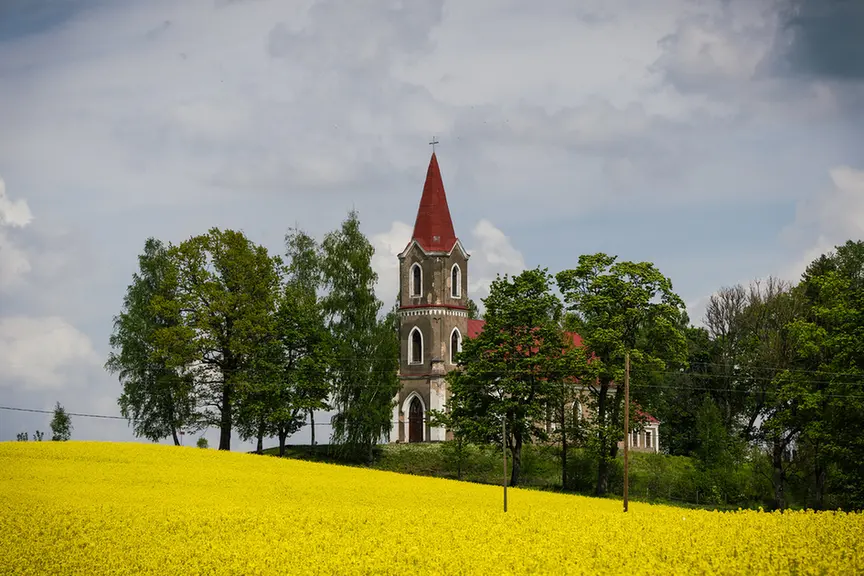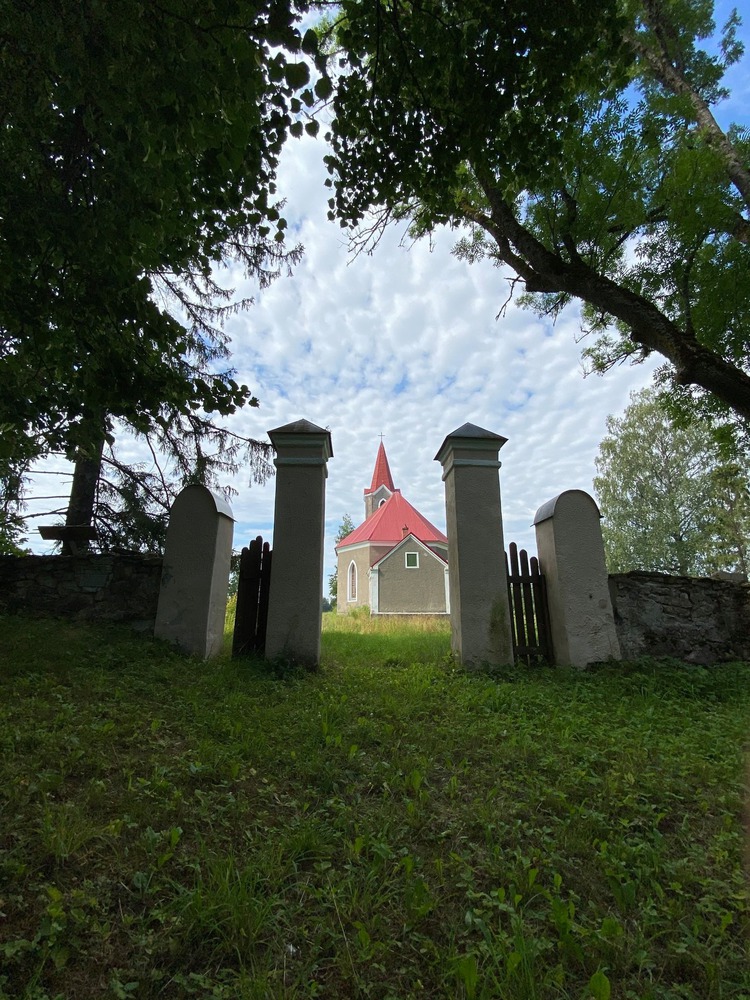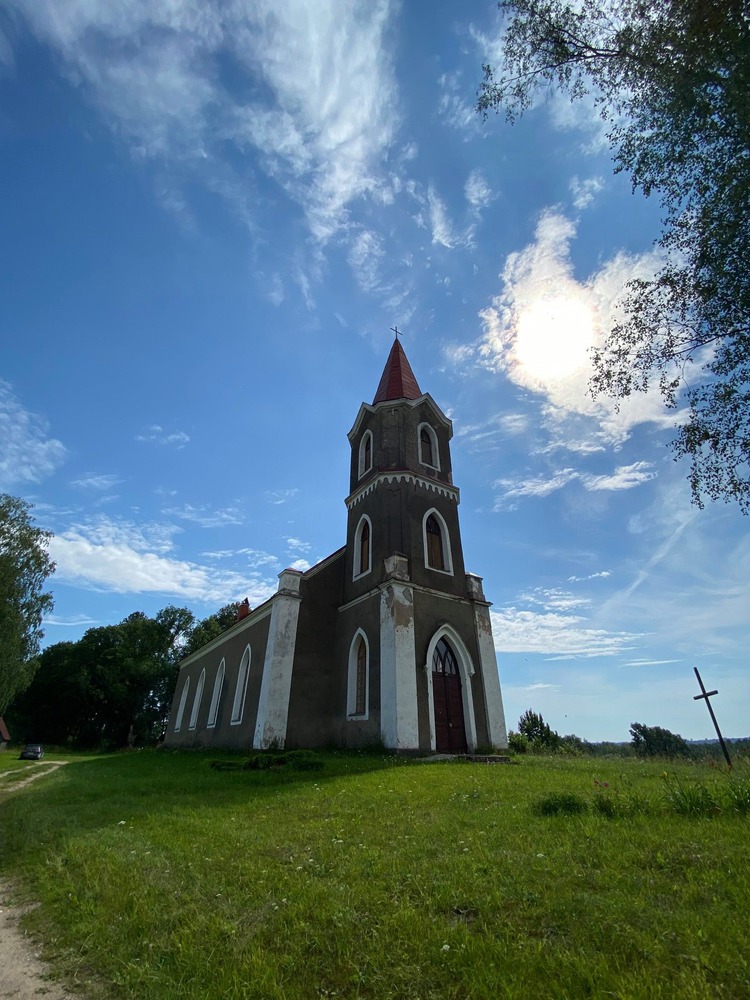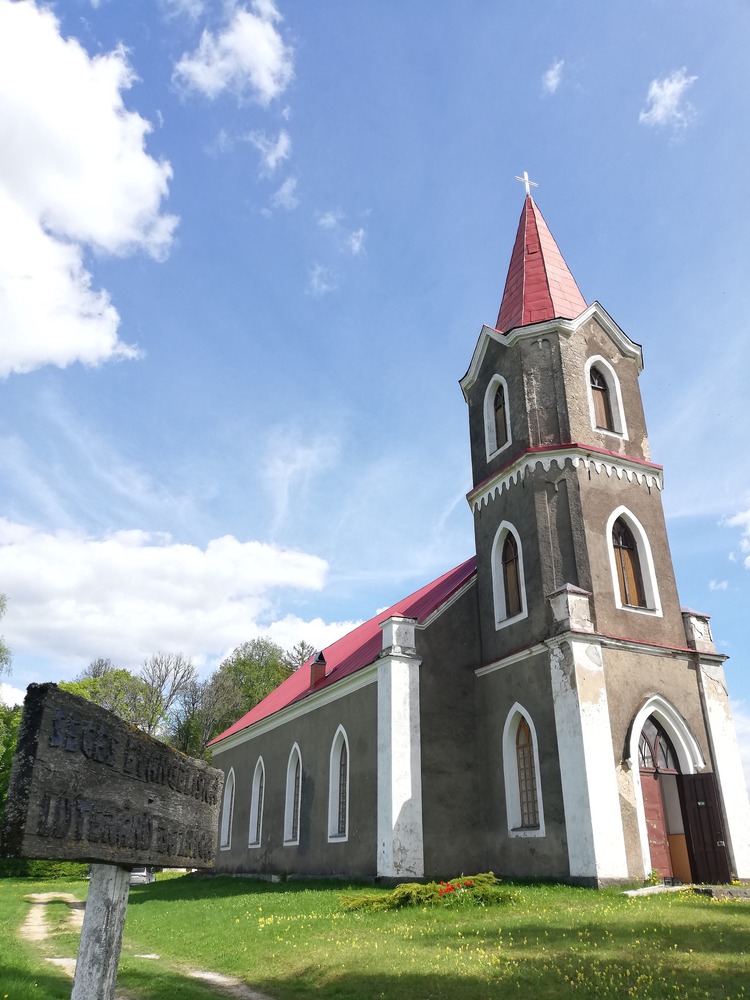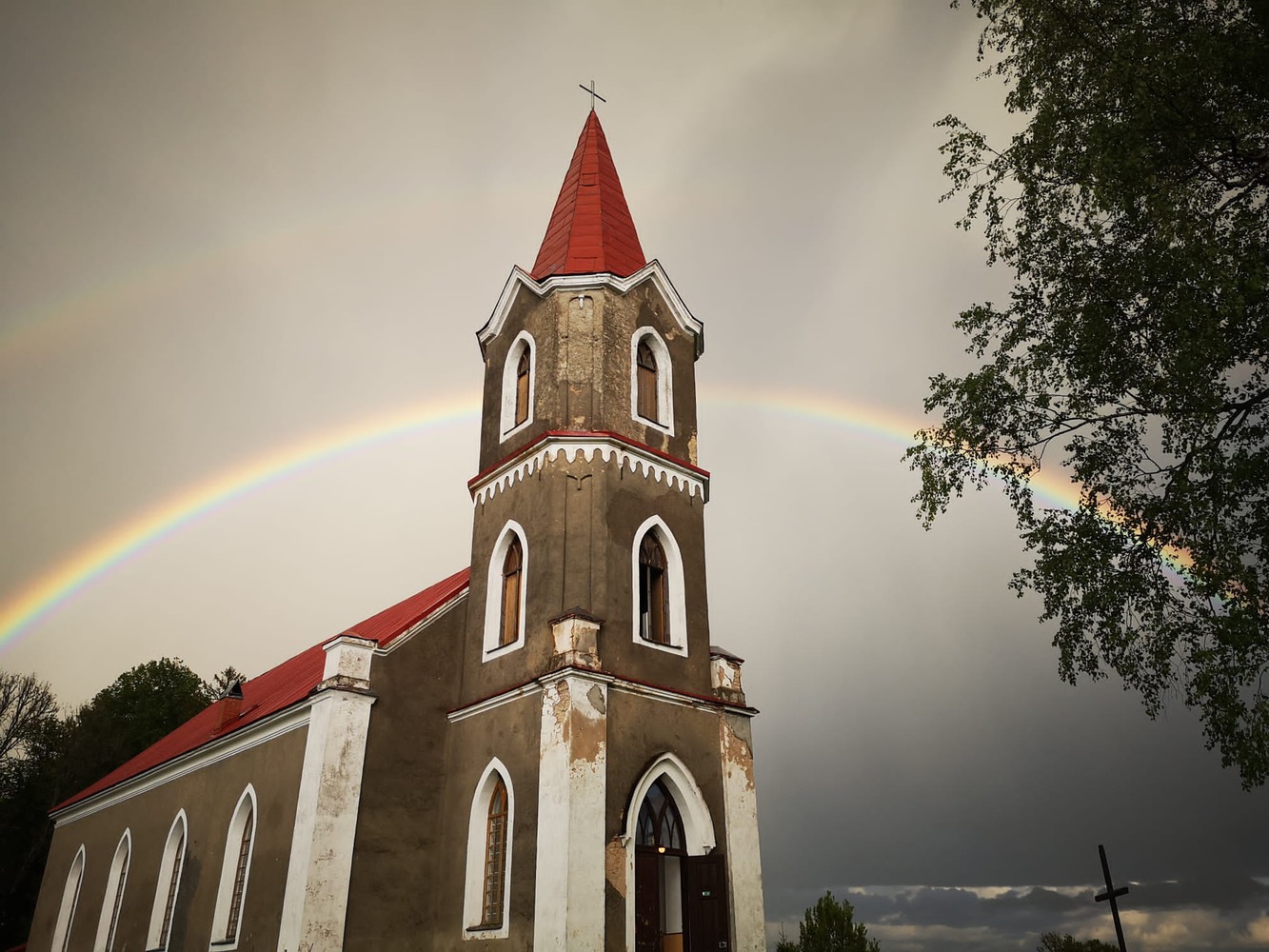
Sece Lutheran church and tomb of Fridrihs Malbergis
- Seces pagasts, Aizkraukles novads, Latvija
- (+371) 22431941
- (+371) 22431941
- https://secesbaznica.weebly.com/
- 56.557800, 25.380699
- Waze
- Google maps
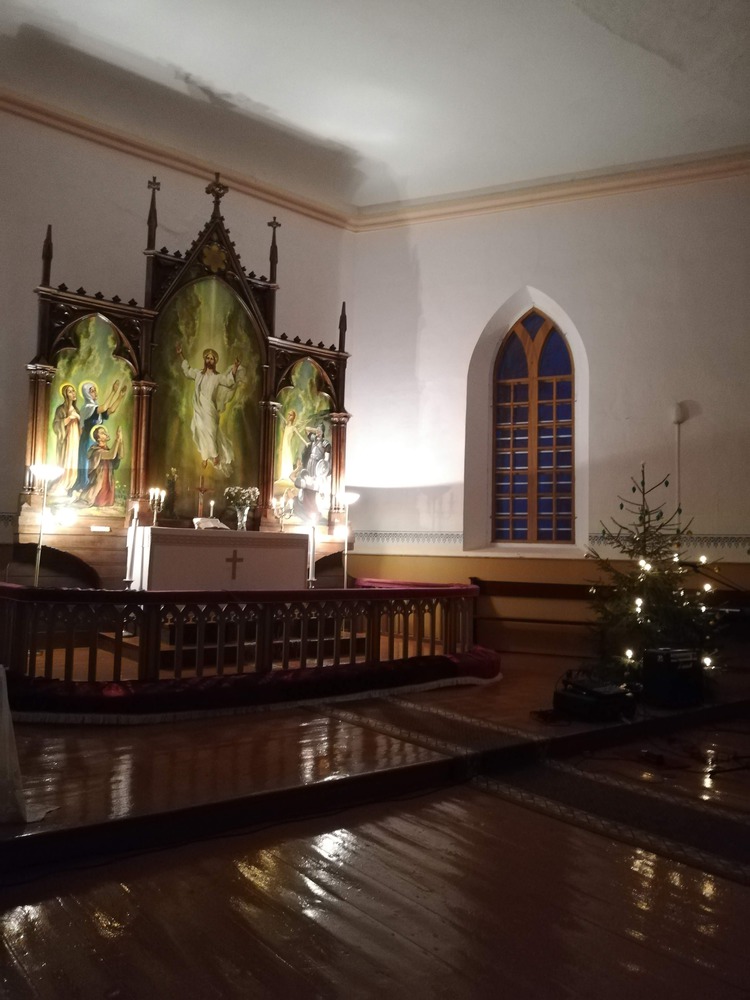
One of the most remarkable Neo-Gothic cultural and historical landmarks in Sece is its church, originally built in 1792. At first, it was a masonry church without a tower, but in 1862 the building was reconstructed according to the design of architect Johann Helt and was complemented by a tower. The renovated church was consecrated on 28 October 1862. The church provides seating for 300 worshippers. Its interior is adorned with historic chandeliers in which candles are still lit today, preserving the traditional atmosphere of the sanctuary.
In the cemetery beside the church rests the poet and teacher Frīdrihs Mālbergs (1823–1907). Known in Latvian literary history more commonly as Frīdrihs Mālberģis, he was a Latvian educator, poet, and participant in the Young Latvia movement, best known as the author of the poem “Staburags and Liesma.” Mālbergs’ life was closely connected with Sece. He served as the sexton of the Sece Lutheran Church and, alongside his church duties, worked as a teacher at the local Sece school in the area now known as Altene. Through his educational work, he contributed significantly to the enlightenment of local residents and the development of Latvian culture. For 31 years he taught and inspired the children of Sece, becoming one of the parish’s most distinguished cultural figures. Nearby are also the graves of German soldiers who lost their lives during the First World War.
Services are held on the fourth Sunday of each month at 2:00 p.m. The church may also be visited at other times by prior arrangement.
Past events (4)
- Aizkraukle municipality and Koknese Tourism Information centre
1905. gada iela 7, Koknese
(+371) 29275412, (+371) 65161296 - Aizkraukle Tourism Information point
Lāčplēša iela 4, Aizkraukle
(+371) 25727419 - Jaunjelgava Tourism Information point
Jelgavas iela 33, Jaunjelgava
(+371) 27366222 - Pļavinas Tourism Information point
Daugavas iela 49, Pļaviņas
(+371) 22000981 - Skrīveri Tourism Information Point
Daugavas iela 85, Skrīveri, Skrīveru pagasts
(+371) 25661983 - Staburags Tourism Information point
Staburaga saieta nams, 2. stāvs, Staburags, Staburaga pagasts
(+371) 29892925 - Nereta Tourism Information point
Dzirnavu iela 5, Nereta, Neretas pagasts
(+371) 26674300 - Mazzalve Tourism Information point
Skolas iela 1, Ērberģe, Mazzalves pagasts
(+371) 26156535 - Irši Manor Barn - Magazina
Irši, Iršu pagasts
(+371) 29275412