Art object "Siberian Crosses"
- Sunākstes pagasts, Aizkraukles novads, Latvija, LV-5130
- 56.458294, 25.480835
- Waze
- Google maps
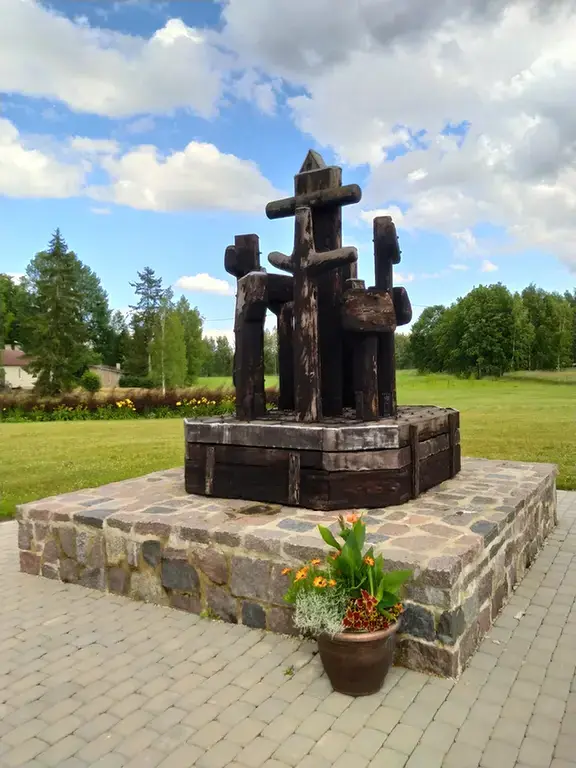
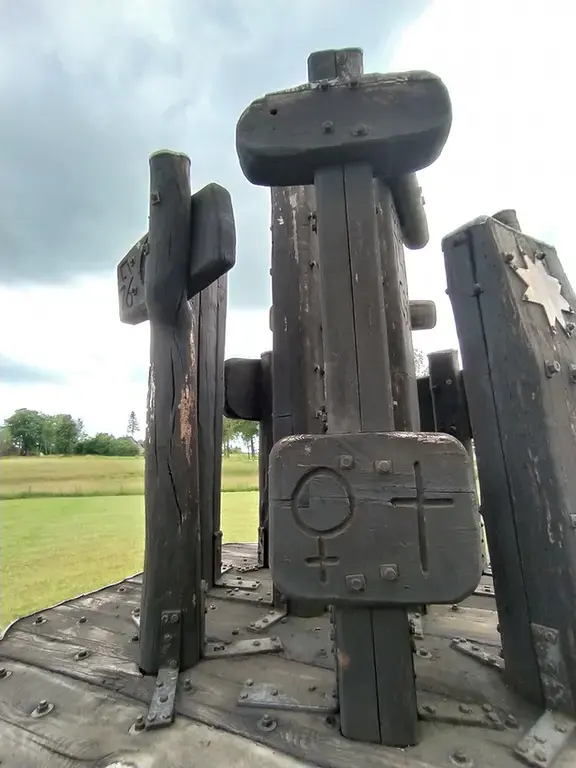
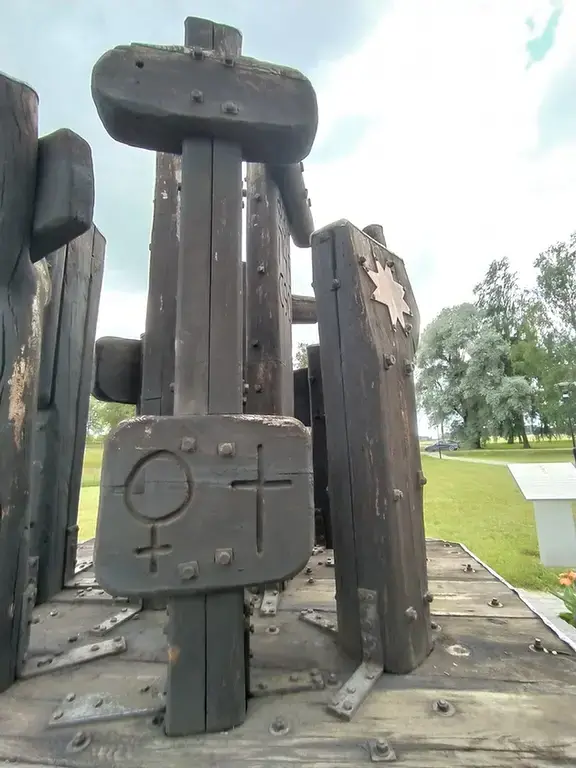
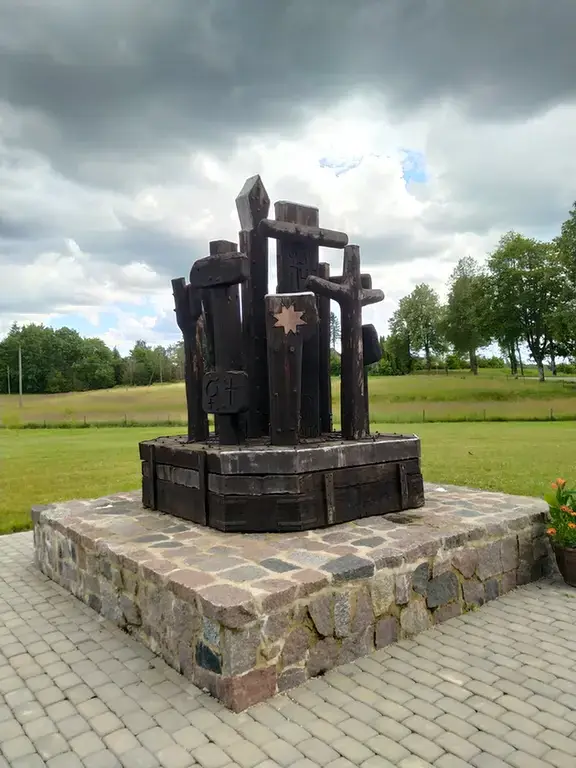
On August 17, 2019, the art object "Siberian Crosses" was unveiled in Sunākste Parish, Aizkraukle Municipality. It was donated by Zigfrīds (Zigis) Sapietis, an artist in the diaspora who was born in Sunākste in 1924 and died in Newburgh, Scotland, in 2014. "Siberian Crosses" is Zigis Sapietis' most impressive work. It is dedicated to all the people of Sunākste and expresses his feelings about what happened to him and many other Latvians who experienced the unwanted World War II and the horrors that followed, including concentration camps. The sculptor's work was created in Scotland and brought by ship to be installed in the center of Sunākste Parish – his native region. This project was made possible thanks to John McGregor, who was the Honorary Consul of Latvia in Scotland, the Ministry of Culture of the Republic of Latvia, the Jaunjelgava District Council at the time, Sunākste Parish, and many other supporters. The project was coordinated by the Latvian Embassy in the United Kingdom.
A little about the author of the sculpture, Zigrfīds (Zigis) Sapietis – the artist's fate has been harsh. He suffered under totalitarian regimes, was imprisoned, arrested – first in Riga Central Prison, then in the Salaspils concentration camp, from which he found a way out by joining the Legion. In 1944, he was seriously wounded on the Kurzeme front and sent to Germany for treatment, from where he fled to Copenhagen in 1945. In Denmark, he found an opportunity to study at the Royal Academy of Fine Arts in Copenhagen and spent the next seven years there. In 1952, he arrived in Edinburgh, Scotland, completed his art studies, built a house, and created his own garden. Zigis Sapietis worked as a sculptor and art teacher at Portobello High School, was a lecturer at the Scottish Arts Council, and was elected to the Royal British Society of Sculptors. Throughout his life, he generously shared his knowledge and love of art. He admired the rock carvings, pottery, and woodwork of Scandinavian Bronze Age artists and craftsmen. The sculptor believed that stone, brick, and wood are always "pleasing to the eye and warm to the soul." The author was able to transform his personal experiences into outstanding, deeply felt works that evoke emotional responses in viewers and make them think about what is essential and human. Several of Ziga Sapieša's works of art are also on display at the World Latvian Art Center in Cēsis.
- Aizkraukle municipality and Koknese Tourism Information centre
1905. gada iela 7, Koknese
(+371) 29275412, (+371) 65161296 - Aizkraukle Tourism Information point
Lāčplēša iela 4, Aizkraukle
(+371) 25727419 - Jaunjelgava Tourism Information point
Jelgavas iela 33, Jaunjelgava
(+371) 27366222 - Pļavinas Tourism Information point
Daugavas iela 49, Pļaviņas
(+371) 22000981 - Skrīveri Tourism Information Point
Daugavas iela 85, Skrīveri, Skrīveru pagasts
(+371) 25661983 - Staburags Tourism Information point
Staburaga saieta nams, 2. stāvs, Staburags, Staburaga pagasts
(+371) 29892925 - Nereta Tourism Information point
Dzirnavu iela 5, Nereta, Neretas pagasts
(+371) 26674300 - Mazzalve Tourism Information point
Skolas iela 1, Ērberģe, Mazzalves pagasts
(+371) 26156535 - Irši Manor Barn - Magazina
Irši, Iršu pagasts
(+371) 29275412